Events
Saudi National Day 2026
Read article

In the green heart of Saudi Arabia lies Aseer, a breathtaking region of misty mountains, terraced farmland and traditional villages that seem to float above the clouds.
Far out in the Red Sea, the Farasan Islands await with their crystal clear waters, mangrove forests and ancient Ottoman ruins. This paradise for divers and nature lovers is home to dolphins, rare gazelles and colourful coral reefs.
Two completely different worlds, one enchanting kingdom. Welcome to the surprising beauty of Saudi Arabia.
The Aseer region is one of the oldest inhabited areas in Saudi Arabia. Traces of human habitation have been found dating back to more than 7,000 years ago. The region was once home to the Queen of Sheba, mentioned in the Bible as an important queen of antiquity. The region was also an important stopover on trade routes between the Middle East and Africa.
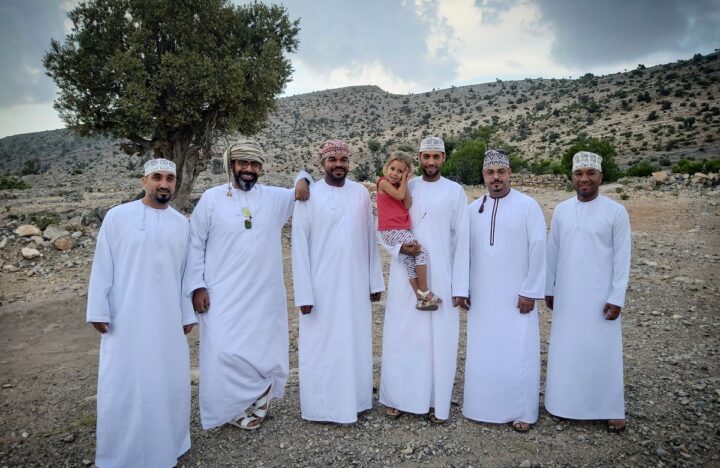
The Aseer region has a rich and diverse culture dating back to ancient times. Residents of the region are known for their traditional dress, music and dance. Men typically wear a white thobe, while women wear a black abaya. The region's traditional dances include the Jizan and the Al-Ardah, which are often performed on special occasions such as weddings.
Abha, the capital, is often the starting point for a journey through the Aseer region.
One of the most special ways to experience Abha is to study its mountain peaks from the glass Joy Venue café with a craft coffee in hand, seated on the Al Dhabbab promenade. The promenade is 14 meters wide and 7 kilometers long.
Impressive views and designer cakes encourage further exploration. Art Street, a short drive away from King Khalid Road, has even more trendy cafes and is decorated with colorful murals. Framed by rows of thick jacaranda trees, the street blossoms a dramatic violet color in May.
A side street off Art Street leads to Abha's main market, an authentic shopping experience that serves the local community, but where you can also sample local food, buy traditional clothing and handmade jewellery.
Another popular attraction is Rijal Almaa village, an ancient village that is a UNESCO World Heritage Site located an hour’s drive from Abha. The village has traditional houses made of red brick and clay and is surrounded by beautiful green valleys. The village is also home to a number of museums that highlight the history and culture of the region.
The local flower men who organize festivals in summer fascinate you with their flower crowns and ancient customs of playing flutes as a pastime while herding their cattle which is accompanied by a typical dance.
A tour of Rijal Almaa is not complete without a visit to the Bees Tower Honey Refinery, a charming honey farm with a tempting assortment of delicious honeys. The nectar is an essential ingredient in one of the local must-try dishes, areeka. Made with warm, slab-fried dough and garnished with local dates, it is topped with sweet honey - the taste of Aseer.
The Aseer region also boasts some stunning natural highlights, including Jebel Soudah Mountain, the highest mountain in Saudi Arabia at 3,133 meters. The mountain offers stunning views of the surrounding valleys and is a popular destination for hikers and nature lovers.
About 40 kilometers (or an hour's boat ride) from Jazan, you'll find the Farasan Islands. More than 80 islands make up the archipelago, but only three of them are inhabited year-round. The largest and most populated island is Farasan Island: about 12,000 permanent residents live on this island, and many commute to Jazan for work. The island is known for its incredible biodiversity—the Saudi Wildlife Authority declared the Farasan Islands a protected area in 1996—and offers beautiful coral reefs for epic diving, a variety of fish, and world-class bird watching for species such as the white-eyed gull, the crab plover, and the sooty falcon. On land, you may catch a glimpse of the endangered Farasan gazelle.

Since the first millennium BC, the province of Jazan has been a magnet for people from Arabia, Africa and Europe. The islands were once known as Portus Ferresanus, and a Latin inscription from 144 AD has been found on the island, indicating the existence of a Roman garrison. Over the centuries, many people have passed through Farasan, leaving evidence of their communities, including the Aksumites and Arabs. The strategic location of Jazan province, and especially the Farasan Islands, proved interesting again in the 20th century during World War II: the Germans built a fort on one of the islands of the archipelago.
It is recommended to book a tour of the island to learn more about the islands' history and ancient trade routes.
For nature lovers, the Farasan Islands offer an abundance of opportunities to spot wildlife. Diving and snorkeling are popular activities because of the clear waters and the presence of coral reefs. You may see whale sharks, dolphins, turtles and a variety of tropical fish. As a bird lover, the Farasan Islands are also a must-visit destination as they are home to several species of migratory birds, including flamingos, storks and eagles.
Another popular activity in the Farasan Islands is exploring the mangrove forests. These unique ecosystems provide a breeding ground for fish, birds and other animals and are an important source of food and medicine for local people. You can explore the mangroves by kayak or boat, and enjoy the beautiful scenery.
In addition to the natural and historical attractions, the Farasan Islands also offer an authentic cultural experience. The locals are friendly and welcoming, and you can sample local cuisine and buy traditional crafts and artwork. One of the most popular dishes on the islands is "hamour," a fish caught in the waters around the islands and prepared in various ways.
Although the Farasan Islands are still relatively unknown to the general public, the Saudi government plans to develop and promote tourism in the region. This means that more and more hotels are being added. Nevertheless, the islands retain their charm and remain an ideal destination for adventurers, nature and culture lovers looking for an authentic and unforgettable experience in Saudi Arabia.
Get inspired and informed before visiting Saudi Arabia