Events

Saudi National Day 2026
Read article

Specialty coffee is growing in popularity worldwide which has caused the revival of coffee cultivation in the Arabian Peninsula. What makes specialty coffee special are the carefully selected and roasted quality beans. The look and taste of Arabic coffee embody the flair of the mysterious Orient.
Since 2018, the number of trendy coffee bars in Saudi Arabia has increased dramatically and coffee cultivation in the country is on the rise. Today, only 1% of the land is used for coffee, but the plan is to plant millions of coffee bushes in the coming years. The government and Saudi Aramco (the world's largest oil company) are providing plants, loans, and water storage.
It is generally believed that coffee beans were first roasted and consumed in the 15th century as the beverage we know today in the Sarawat Mountains. Historically, the area was part of greater Yemen, when borders were far less important than tribal and family relationships. The Sarawat Mountains, also known as the Sarat, are part of the Hijaz Mountains in the western part of the Arabian Peninsula. The mountain range has peaks up to just over 3,500 meters. The fog coming in from the Red Sea colors the flanks of this mountain range green.
During that period, Arab historian Abd Al Ghaffar first documented an infusion of roasted, ground coffee beans used by Sufis to help them stay awake during religious recitations. Over time, it became an essential aspect of Arab culture, with public cafes, called maqha, where men gathered to drink coffee and exchange ideas.
In the southernmost tip of Saudi Arabia, just a few kilometers from the Saudi-Yemeni border, lies the verdant region of Jazan, blessed with its rocky mountain peaks, verdant wadis, deep forests, hot springs, boundless fertile soil and 54,000 coffee trees. It is also home to the local Khawlani coffee bean which is considered one of the best varieties of coffee beans in the world.
The bean is named after the ancient Khawlan tribes that lived between present-day Saudi Arabia and Yemen. Grown at more than 800 meters above sea level, Khawlani is characterized by the fertile growing conditions at high altitude, the quality of the beans and the degree of roasting. But no matter how the coffee is prepared, it forms the cultural identity of farmers in the area. They regard its cultivation as a 300-year-old art passed down through generations, and they consider the hospitality surrounding it an age-old tradition that strengthens social ties in the remote valleys. Small cups of piping hot coffee require constant attention and refills, allowing hosts to show respect and care for their guests.
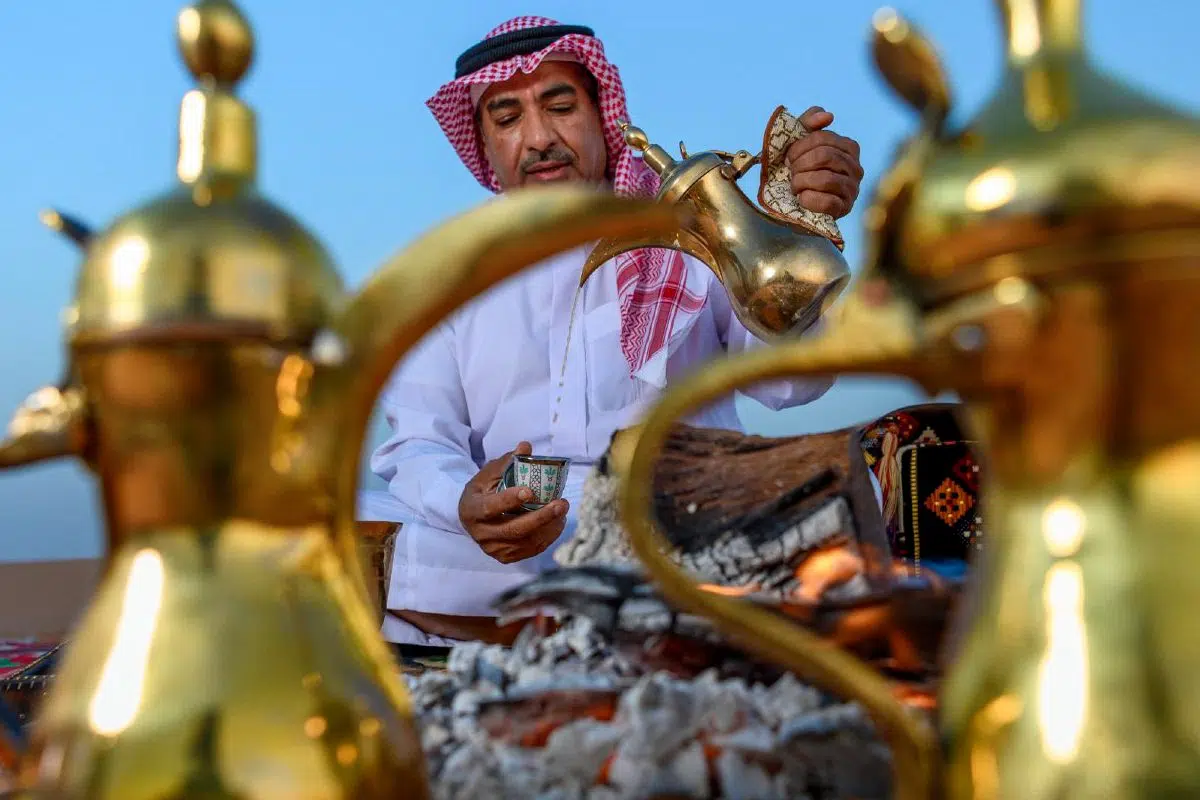
Traditional Saudi Arabian coffee is brewed from high-quality Arabica beans. The beans are roasted until they have a rich, dark color and then finely ground into a powder. The powder is then placed in a special coffee pot called a "dallah" and mixed with water. The coffee is then brought to a boil and served in small cups known as "finjan.
Arabs are known to add cinnamon, saffron and cardamom to their coffee, among other things. Arabic coffee has a light and creamy texture, with a subtle green hue. The taste is pungent and varies depending on the strength and spices used. It is more reminiscent of spiced tea than traditional coffee.
Coffee culture in Saudi Arabia is deeply rooted in Islamic tradition. Coffee is often served to guests as a sign of hospitality and respect, and it is also an important part of Ramadan traditions, where it is used to break the daily fast.
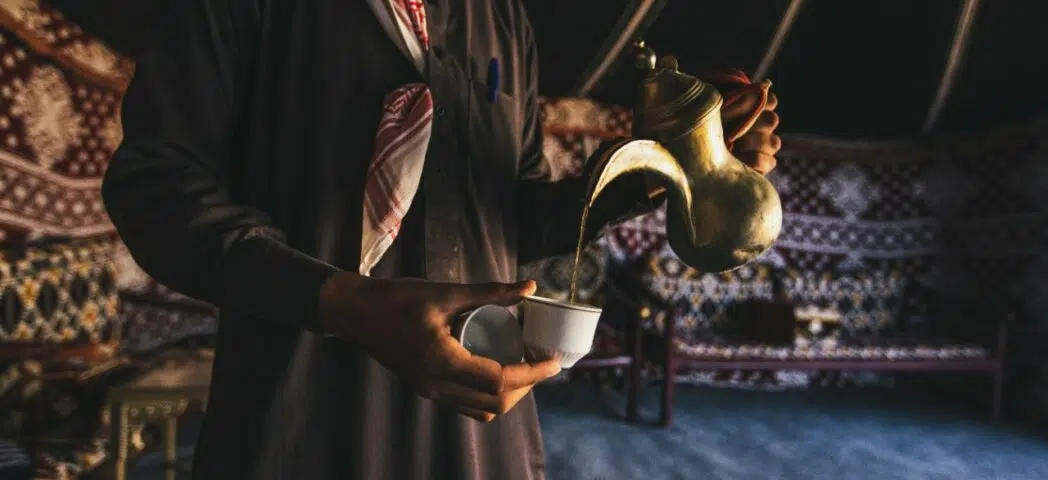
A hallmark of Saudi Arabian coffee culture is the way coffee is served. Coffee is often served with dates, which are also an important symbol of hospitality in Arab culture. It is also traditionally served in a ceremonial setting, with the host using the coffee pot to pour the coffee into the finjan (lavishly decorated handle-less cup) while uttering the ritual word "bismillah" (in the name of God). Arabs use only their right hand to pour and drink, as the left is traditionally considered unclean. The finjan should always be no more than half full. If you want another coffee you will have to tilt the empty cup slightly across the table. A thoughtful host understands this gesture. It is still customary for guests to drink a minimum of one to three cups, as required by courtesy standards.
Saudi Arabia's coffee culture has developed significantly in recent decades. The country has emerged as a major player in the global coffee industry and now exports high-quality coffee beans around the world. Meanwhile, local products as well as international chains have opened their doors, serving both traditional and modern coffee varieties.
In addition to drinking coffee as a social element, it is also an important economic element in Saudi Arabia. Coffee plantations are an important source of income for many people in the country, and much time and money is invested in developing the coffee industry.
In short, coffee culture in Saudi Arabia plays an important role in people's daily lives. It is a sign of hospitality and respect, and it brings people together in a ceremonial setting. The coffee industry in the country is also of great economic importance and contributes to the development of Saudi Arabia.
Get inspired and informed before visiting Saudi Arabia