Events
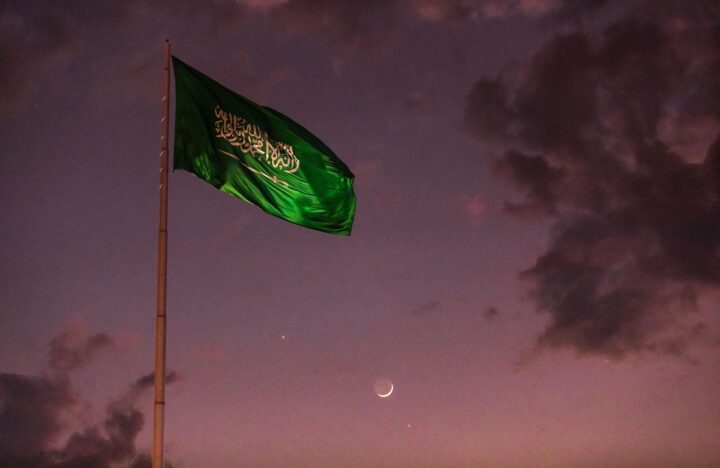
Saudi National Day 2026
Read article

Saudi Arabia offers not only a breathtaking variety of natural beauty, but also a wealth of modern museums and cultural highlights. From ancient cultures to experimental modern art and everything in between, Saudi Arabia is rapidly expanding its museum offerings to compete with art centers from other countries. Read more about Saudi Arabia's finest museums here and be inspired to visit this beautiful and diverse country.
Although it has a modern look on the outside, the National Museum in Riyadh takes visitors on an immersive journey through centuries of culture, art and history - from prehistoric Arabia to the present. With interactive exhibits, replicas of the most important (religious) buildings, Neolithic petroglyphs, ancient manuscripts and traditional crafts, this museum offers a deep insight into the rich history and culture of Saudi Arabia. Education and entertainment come together in this two-story, 28,000-square-meter museum. Explore the various exhibits through their app and then take a virtual tour.
At the Al-Faisal Museum of Arab-Islamic Art, you can see 1,400 years of history through Islamic art, weapons, wood carvings, and coins, learning about the history of what was once a global empire. Persian textiles and ceramics are displayed alongside weapons captured in southern Europe, along with Andalusian artworks and primitive medical instruments used in early Arabia. Their collection of historical coins covers the Islamic world at its peak, with gold dinars minted in Spain, Syria, Egypt, and Mecca. In addition to Arab-Islamic artworks, the museum pays tribute to the life of King Faisal, the Saudi monarch who was assassinated in the 1970s.
This huge museum complex in Jeddah covers 10,000 square meters, including 12 buildings and more than 300 rooms. It was built to reflect the traditional Hijazi architecture of Jeddah. It contains numerous artifacts, Islamic manuscripts, ancient tribal costumes and coins, as well as weapons, furniture and utensils from the Arab world.
Located in Jeddah's Al Faisaliyah neighborhood, the museum focuses on the origins of the city itself, and its exhibits cover important events in the city's history, such as the Siege of Jeddah and the Battle of Uhud.
Due to the presence of an incredible collection of Korans, gathered from different eras, a visit to the museum is often included in a pilgrimage, but you can also visit the museum as an individual. It is open daily from 9:00 a.m. to 1:00 p.m. and from 5:00 p.m. to 9:00 p.m., except on Fridays.
Go on a spiritual journey and discover the fascinating history of Madinah through the photo galleries of this private museum. Admire city models showing Madinah in different time periods and view relics, such as the arch of Sa'd ibn Abi Waqqas, an esteemed companion of the Prophet Muhammad. Discover how the landscape and people of Madinah have changed throughout history, including an evolution of the Masjid an-Nabawi, the Prophet's mosque.
The ancient oasis of AlUla is perhaps Saudi Arabia's most important (open-air) museum, a place where history is not only displayed in a museum, but literally carved into the landscape. AlUla, home to Hegra, a UNESCO World Heritage Site and the second largest city of the Nabataean kingdom after Petra, is a living museum. Although traditional indoor museums for the region are still under development, the entire valley functions as an open-air museum, and the current visitor centers provide essential context and insight.
The Royal Commission for AlUla (RCU) is spearheading an ambitious project to develop AlUla into a global destination for culture, heritage, nature, and adventure. This involves not only the preservation and careful excavation of the extensive archaeological sites, but also the creation of world-class museums that will tell the region's multifaceted story. The vision for the museums in AlUla is to create spaces that blend seamlessly with the natural and historical environment, using advanced technology to bring ancient stories to life.
Also known as Ithra, which means "enrichment" in Arabic, this 18-story center is surrounded by smaller circular structures and the desert. The striking complex of shiny steel tubes is not only a progressive architectural highlight, but also a cultural center with a library of more than 270,000 books, an auditorium and exhibition spaces. It is a place where ideas and dreams come to life. Visit their website for information on current exhibitions, workshops such as 3D ceramic printing and lectures such as SciNight, especially for young people interested in science.

Dive into the world of science at Scitech. Enjoy an IMAX show, explore the aquarium and admire the stars and planets in the Scitech Astronomical Observatory. Discover the role of technology in our daily lives in the Amazing Technology Hall and take a journey through space in the Earth and Space Hall, which features models of the formation of the moon and the Hubble Space Telescope.
Get inspired and informed before visiting Saudi Arabia