Events
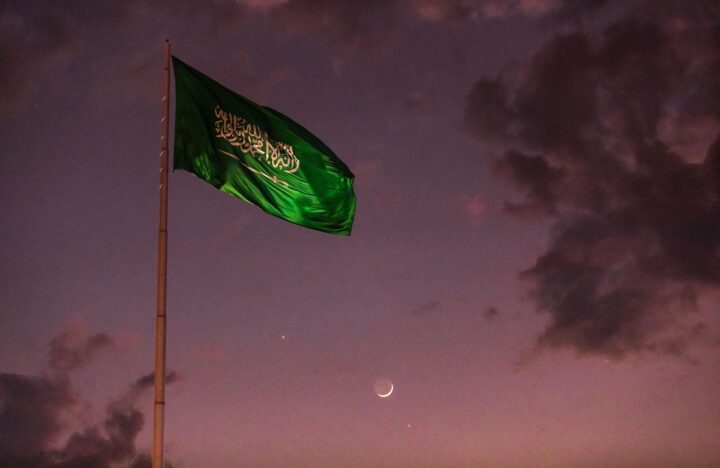
Saudi National Day 2026
Read article
Travel photographer Tim was one of the first to visit Saudi Arabia when the country opened its borders to non-Muslims in late 2019. How was he received? And what did he find? In this blog, you can read more about his first impressions, musings, Vision 2030 and sustainable tourism.
I have not yet taken ten steps into the Mediterranean-looking coastal town of Doeba, or a car comes driving up beside me. The driver, a man with a broad smile and lots of voice volume, shouts "Welcome to Saudi Arabia! Something I've been hearing every day since I landed. Beside him, I see two glistening eyes under a black nikab, a face-covering veil. Only by the moisture in her eyes can I tell that she is smiling and that she is pleasantly surprised to see me.
Not much later, an old Landcruiser, an off-road vehicle, tears past me, with a boy behind the wheel who can only just tie his laces. He zigzags across the road, along with his friends, hanging out of the opened doors. As their phones capture me I am kindly applauded. My first 10 minutes in Doeba are telling. Although the country has only just opened, foreigners are welcomed with open arms and tourism is high on the agenda in Saudi Arabia.
Narrow alleys lead me past dilapidated mud houses in the old heart of Doeba. I look past a leaning wooden shutter into a building and see that the back is no longer standing. The trunks of date palms, which served as a base for the ceiling, now lie on the ground, and the walls are a breeding ground for ivy. The ruin is already beautiful, and then the renovation has yet to begin ...
Saudi Arabia is completely dependent on oil revenues. Vision 2030 aims to change this. The country must be ready for large-scale tourism by 2030. With an investment of one trillion dollars, the country hopes to attract 70 million international and 80 million domestic tourists annually by the end of this decade.
At a rapid pace, dilapidated old city centers, such as here in Doeba, are being refurbished. In the desert and on the Red Sea coast city-sized luxury resorts are springing up. Areas of cultural or historical value are being hermetically sealed and provided with entrance buildings. And guides are being trained to speak to future visitors in multiple languages.
Crown Prince Mohammed bin Salman, the initiator of Vision 2030, has looked closely at other popular vacation countries and is not letting the grass grow under his feet. He already opened borders to non-Muslims, attracting large-scale music festivals and sporting events such as Soundstorm MDLBeast in Riyadh and the Formula One race in Jeddah. Everything is being pulled out to show the world that Saudi Arabia is ready for tourism.
It all sounds nice and looks even better. Still, I wonder if Mohammed bin Salman shouldn't have used second, third and fourth gear as well. For the country's millennials (Generation Y), the changes can't come fast enough. But what about older Saudis? How are they experiencing these sweeping changes?
Just a few years ago, Saudi Arabia was known as one of the most conservative countries in the world. The creation of a perfect tourist destination and a new revenue model; that does not necessarily create progress. Perhaps the gain of Vision 2030 lies in the fact that an exchange is finally possible between us, the outside world, and the Saudis.
As a passionate traveler myself, I think it's wonderful that at the end of 2019 I finally had the opportunity to get to know a country that is largely authentic, to experience how hospitable the people are, and to learn about the beautiful values and themes in Islamic culture. But it also works the other way around. Saudis are suddenly exposed to people with different cultures and opinions, and can adjust their own ways of thinking and viewing the world on that basis—if they want to.
If Vision 2030 succeeds in closing the gap between different races, genders and religions, it will be a success in my eyes. Let us hope that the gates of tourist attractions and resorts will remain open to all.
NEOM
NEOM is Saudi Arabia's flagship mega-project. It is a vast new region under development in the northwest of the country. NEOM will function as a special economic zone and will house various future-oriented economic sectors. It will also become an important tourist destination. The area covered by NEOM is almost as large as Belgium and larger than Kuwait. It includes several mega-projects: The Line, a 170 km long linear city (construction of which has been halted for the time being, see this article in The Financial Times); Trojena, a mountain tourism and ski resort; Oxagon, an advanced industrial port city; Sindalah, a luxury island resort; and Magna, a collection of ultra-luxury hotels along the NEOM coastline. The projects will open in phases over the coming years.
Red Sea Global
Red Sea Global (RSG) is the developer behind two major tourism projects: The Red Sea and Amaala. The Red Sea is built around a coral lagoon with more than 90 islands and a large inland desert area. The first hotel opened in late 2023, with 50 hotels planned on 22 islands by 2030. Amaala is a luxury wellness resort 130 km further north. RSG aims to set new global standards in sustainable development and regenerative tourism.
Diriyah
Diriyah is a historic oasis town on the outskirts of Riyadh that is being redeveloped into a cultural and lifestyle destination. The restored 18th-century mud-brick town at its heart, At-Turaif, officially opened to tourists in 2022. Surrounding this historic core, large new neighborhoods and districts are being developed in traditional architectural styles, with the goal of completing the entire project by 2030. As the ancestral home town of the ruling Al Saud family, the redevelopment of Diriyah symbolizes a new era for Saudi Arabia, especially as the country reshapes its national narrative.
Qiddiya
Qiddiya is a huge entertainment city under construction southwest of Riyadh. It is set to become Saudi Arabia's sports and entertainment capital and will include theme parks, sports arenas, a performing arts center, and a Formula 1 race track. Located about a 40-minute drive from Riyadh, Qiddiya will also feature hotels and residential areas. The first theme parks are expected to open in 2026.
ROSHN
ROSHN is a real estate developer established to increase the housing supply in Saudi Arabia. It is developing more than 400,000 new homes to accommodate the growing population and support the national goal of increasing home ownership from 47% in 2016 to 70% in 2030. ROSHN is developing large new residential neighborhoods in key cities, including Riyadh, Jeddah, Mecca, Dammam and Al-Hofuf.
Get inspired and informed before visiting Saudi Arabia