Events

Saudi National Day 2026
Read article
Thousands of years ago, an artist patiently carved the outline of a large cat into a rock face in Shuwaymis, southeast of AlUla, Saudi Arabia. The feline shape, with its flat facial profile, long tail, and graceful form, is clearly an Arabian leopard. The majestic animal was once a common predator in the region, and the ancient artist captured the leopard just before it was about to overpower its unseen prey. The artist is part of the rich history of the area, and it is expected that the Arabian leopard will soon, unfortunately, only be admired in words and images—it has been almost 10 years since they were last sighted in AlUla.
Every year, hundreds of species become extinct and many animals are classified as vulnerable, endangered, or, like the Arabian leopard, critically endangered. Around the world, conservationists are working to save some of the most endangered species through reintroduction programs that return animals to places where they have disappeared—efforts that could save species such as the Arabian leopard from extinction.
Restoring vanished species to their natural habitat is more than a gesture, it can be critical to maintaining the biodiversity that is the foundation of a healthy ecosystem: when you remove one species, the consequences can be enormous. Before the reintroduction of wolves to the park in 1995, the willows and aspens in Yellowstone National Park in the US were in decline, beaver populations were dwindling and even rivers were flowing differently. The problem that contributed to the park's imbalance was the extermination of wolves decades earlier. By the 1930s, wolves were no longer a threat and elk were thriving, resulting in overgrazing and thus a shortage of saplings.
With fewer trees, beaver numbers declined, changing the course and even the water temperature of Yellowstone's rivers. The careful reintroduction of wolves to recovery sites in Yellowstone has led to the rebalancing of beaver and tree populations.
This remarkable success highlights the power of reintroduction programs to actively restore species, but it can be a lengthy, complicated and costly process. The first step is determining the need for reintroduction by monitoring numbers and distribution of a species, and understanding the rate, causes and consequences of its decline. Even using technology such as drones and camera traps, it is difficult to determine precise numbers. However, any species classified as "critically endangered" on the IUCN Red List faces an "extremely high risk of extinction" and is likely to need human intervention to survive. This often begins with detailed scientific studies of the animal, its behavior and even its genetics to determine what is needed for a successful reintroduction.
Reintroductions usually require a substantial and healthy population of animals, which presents conservative conservationists with a dilemma, since scarcity or disease of the species is usually the trigger for action. Sometimes animals can be transferred from other wild populations, but extreme caution must be used in doing so as not to harm the source populations. Often new stock must be produced through captive breeding programs, and these are much more scientific than simply putting males and females together and letting nature take its course. Genetic diversity is essential to a successful captive breeding program -- and to the survival of a species -- so detailed records of each animal's parentage are kept, and breeding pairs are carefully selected based on their genetics to avoid inbreeding. Even an animal's temperament may be considered. Still, the mating game can be a slow and frustrating process.
In addition to breeding genetically suitable animals, the recovery site itself must be ready to receive them. Although the species historically thrived in a particular location, its suitability is not always obvious. The species' decline is likely linked to ongoing environmental factors, including climate change, invasive species and declining food supply, as well as human factors such as pollution and land development. Resolving these underlying issues is essential to the success of a reintroduction, but requires research, time and effort.
In addition, the recovery site may need to be modified. Temporary fencing can help maintain control, reduce risks from invasive species and minimize human impact while the reintroduction settles in. The area can also benefit from restoration, enhancing other native plants and animals to create habitat that best meets the essential needs of the species, such as shade, shelter and food. The goal is to minimize human intervention and build a self-sustaining colony as part of a healthy ecosystem. Whether successful or not, ongoing monitoring of a reintroduced population provides crucial lessons for future programs, increasing their likelihood of success.
This could be good news for the Arabian leopard. With fewer than 200 specimens in the wild and no documented sightings of a leopard in Saudi Arabia since 2014, a crucial reintroduction program has been established to bring the big cat back from the brink of extinction. It began with efforts to establish their numbers in Saudi Arabia, but although camera traps captured images of thousands of animals in 13 locations over two years, not a single leopard was observed. It is a disappointment that has heightened fears about the species and led to an even greater sense of urgency for the conservation of this big cat.
The plan is constantly evolving and tracking science as data is carefully collected. Currently, it focuses on reintroducing at least five captive-bred leopards to three priority sites by 2030, including Wadi Nakhlah, Harrat Uwayrid and Harrat AlZabin. These sites provide the vast mountain landscape that Arabian leopards need - rock ledges and caves for hunting and shelter. These habitats are being scientifically studied to determine the extent of vegetation, the number of potential prey animals and the activities of potential competitors, such as wolves. Analyses of these crucial factors will determine the ultimate suitability of each site and prescribe possible modifications, ranging from restoring native vegetation to enhancing the number of prey animals, such as gazelles and ibex, to ensure they can support the reintroduction.
A specialized team from the Royal Commission For AlUla is restoring the flora and fauna of nature reserves to provide food for herbivores. This year, RCU will release up to 1,580 animals in reserves in AlUla: Arabian oryx, Arabian and sand gazelles and Nubian ibex.
The annual Arabian Leopard Day took place on February 10, 2026. Introduced by Saudi Arabia in 2022, Arabian Leopard Day is now officially recognized by the UN. Arabian Leopard Day 2023 celebrated the birth of four leopard cubs and progress in reintroduction efforts. In addition, Arabian Leopard Day aimed to raise general awareness of the significance of the day and increase public engagement.
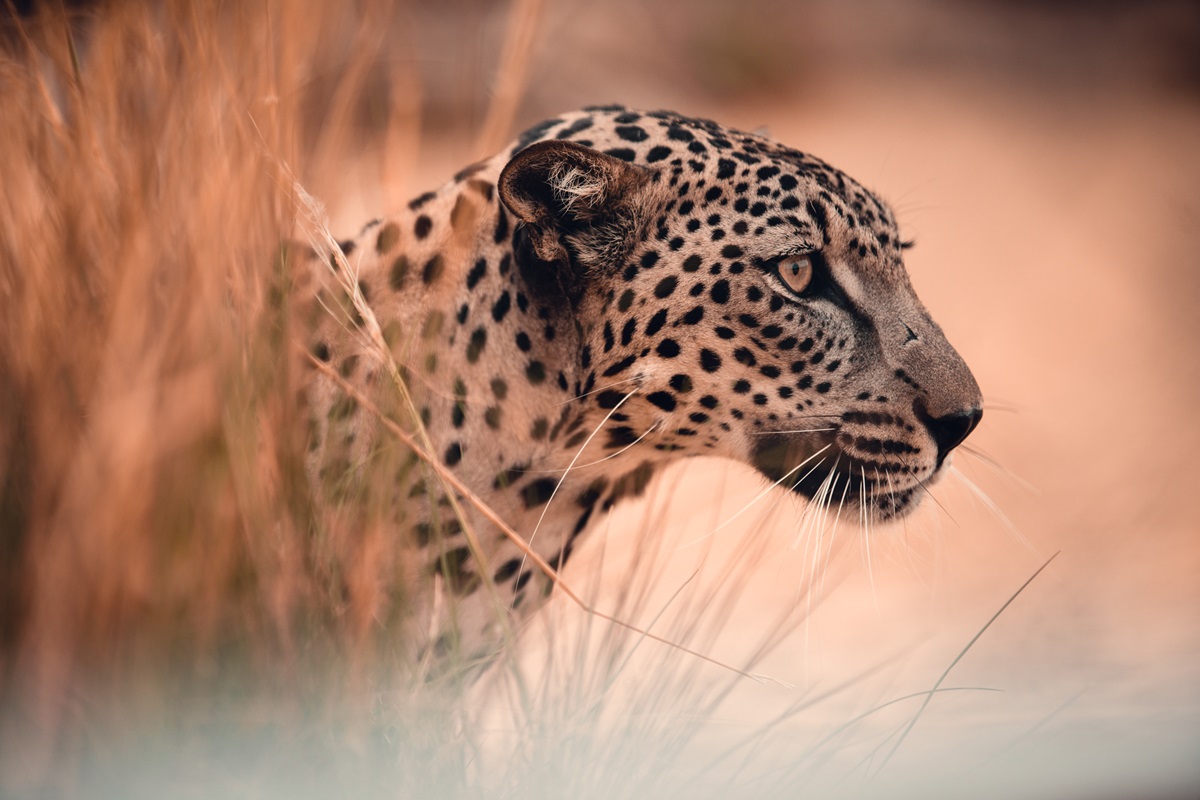
From a sandy, rock-strewn bottom, an Arabian leopard cub launches herself to the branch of a tree. She slips, recovers and gets up again - it's all part of the learning process of becoming a leopard. This is Amal and great things are expected of her; even her name means "hope." Born in the breeding program in Taif, she is now one of 19 Arabian leopards being cared for in captivity who are the vital link to the future of the species. They will continue to breed, growing in numbers, until eventually cubs can be released into the wild, where they will roam, supervised by specially trained park rangers charged with anti-poaching efforts, scientific monitoring and community education. It's a very ambitious project - and one with high expectations. For now, Amal's graceful figure forms a fragile but breathtaking link to the past as the heritage of the Arabian leopard echoes through the ages.
A new chapter for Saudi Arabia's wildlife is about to begin ...
AlUla, located in northwestern Saudi Arabia, is a destination that will enchant history buffs and nature lovers alike. This remarkable place has a rich history dating back to many centuries before Christ and also offers breathtaking natural beauty.
The historical significance of AlUla cannot be overstated. The area was an important trading hub on ancient trade routes, such as the Incense Route, which connected the East and West. As a result, AlUla was home to various civilizations, including the Nabataeans, Romans, and Ottoman Turks. Much of their architectural and cultural heritage has been preserved and can still be admired today.
One of the most striking sights in AlUla is Hegra. This UNESCO World Heritage Site is the best-preserved city from the Nabataean period outside Jordan. Visitors can wander through the narrow streets, admire breathtaking rock tombs, and study the historical inscriptions and reliefs. It is a magical place that offers a glimpse into life in ancient Arabia.
In addition to the historical sites, AlUla also offers spectacular natural scenery. The area is surrounded by impressive rock formations, mountains and vast deserts. One of the highlights is the AlUla Valley, where you can enjoy the mesmerizing rock formations of the Hejaz Mountain Range. The Elephant Rock, named for its shape resembling an elephant, is an iconic feature of the area and a popular spot for photographs.
Get inspired and informed before visiting Saudi Arabia